
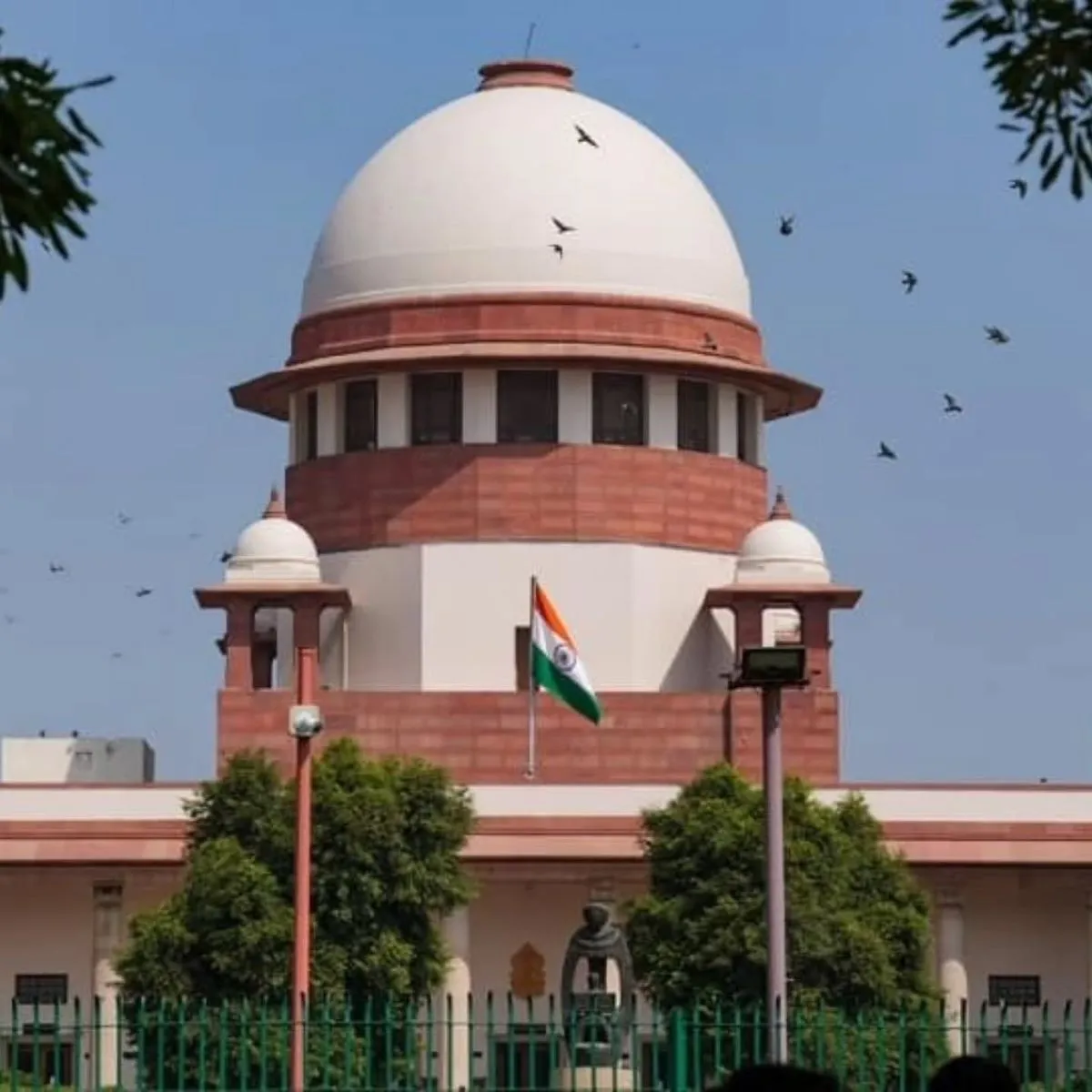
The Election Commission of India has informed the Supreme Court that more than 37 lakh appeals arising from the Special Intensive Revision of electoral rolls in West Bengal remain pending. In an affidavit, the Commission has sought an increase in the number of appellate tribunals from the present 19 to 42, arguing that the expansion is essential to dispose of the massive backlog within a reasonable time and to strengthen the review process.
Scale of the Backlog
According to figures placed before the Court, roughly 38.2 to 38.3 lakh appeals have been filed before the SIR-related appellate tribunals in West Bengal. Of these, only about 1.02 to 1.26 lakh cases have been decided so far. This leaves more than 37 lakh appeals still awaiting disposal, representing a pendency of approximately 97 per cent.
The Commission has noted that at the current rate of disposal, clearing the entire backlog could take around 12 years if the existing capacity remains unchanged. Such a timeline would keep a large number of citizens in prolonged uncertainty about their voting status and would strain the credibility of the revision exercise itself.
Nature of the Appeals
The ECI has provided a breakdown to clarify the character of the litigation. Of the total appeals, approximately 22.2 lakh have been filed by individuals whose names were deleted or excluded during the Special Intensive Revision and who are seeking restoration of their entries in the electoral rolls. Another roughly 16.1 lakh appeals challenge the inclusion of names in the rolls.
The Commission has emphasised that it would be inaccurate to portray the entire volume of cases as arising solely from wrongful deletions. Objections to fresh inclusions form a substantial share of the work before the tribunals. This dual character of the caseload—restoration claims on one side and challenges to additions on the other—adds to the complexity of adjudication.
Performance of Existing Tribunals
Nineteen appellate tribunals are currently functioning in the state. These were set up following earlier judicial directions to provide a dedicated forum for appeals against decisions taken during the SIR process. While the tribunals have begun deciding cases, the volume of filings has far outstripped their capacity.
In the matters decided so far, a high proportion of appeals against deletion have resulted in the restoration of names to the electoral rolls. Official data indicate that well over 90 per cent of the decided restoration appeals have succeeded, with only a few thousand claims being rejected. This outcome underscores both the importance of the appellate layer and the need for it to function at a much faster pace.
The Proposal for 42 Tribunals
To address the pendency, the Election Commission has proposed that the number of appellate tribunals be raised to 42, corresponding to the number of Lok Sabha constituencies in West Bengal. The suggestion is that one tribunal per parliamentary constituency would allow more localised and efficient handling of appeals, reduce geographical and logistical burdens, and enable quicker scheduling of hearings.
The Commission has indicated that it has no objection to the expansion and views the increase as a practical measure to streamline and expedite disposal. It has also referred to the possible use of technology, including software that would allow judicial officers to conduct hearings remotely where appropriate, further improving access and speed.
Context of the Special Intensive Revision
The Special Intensive Revision of electoral rolls in West Bengal generated large-scale additions, deletions and corrections. The exercise aimed to cleanse the rolls of inaccuracies, duplicate entries and other discrepancies. As with any intensive revision, it produced a significant number of claims and objections that required quasi-judicial determination.
The Supreme Court has been monitoring aspects of the process through petitions that raise concerns about fairness, opportunity of hearing and the overall integrity of the revision. The ECI’s latest affidavit forms part of its response to these proceedings and seeks to place the scale of the appellate workload and the institutional requirements for handling it squarely before the Court.
Implications of Prolonged Pendency
A backlog of this magnitude has several consequences. Citizens whose names were removed remain uncertain about their ability to vote until their appeals are decided. Those who objected to inclusions likewise await finality. Extended delays can erode public confidence in the electoral roll and create administrative complications for election officials preparing for future polls.
From an institutional perspective, the situation tests the capacity of the appellate mechanism created specifically for the SIR. Without additional tribunals or significant process improvements, the gap between filings and disposals will continue to widen. The Commission’s request for expansion is therefore framed as a necessary corrective rather than an optional enhancement.
Judicial Oversight and Next Steps
The matter remains under the consideration of the Supreme Court. Petitioners have pressed for faster disposal, greater transparency and adequate institutional support for the appellate process. The ECI’s affidavit acknowledges the scale of the problem and offers a concrete structural solution aligned with the state’s parliamentary map.
Any decision to increase the number of tribunals would require coordination with the judiciary for the appointment or designation of suitable officers, along with administrative arrangements for infrastructure, staffing and case management systems. The Court will weigh the Commission’s proposal against the rights of appellants and the broader public interest in accurate and timely electoral rolls.
Strengthening the Review Process
At its core, the request for 42 tribunals is an acknowledgement that the volume of disputes generated by the West Bengal SIR exceeded initial expectations. An effective appellate layer is essential to correct genuine errors, protect the right to vote, and maintain the integrity of the rolls. Expanding capacity is one of the most direct ways to ensure that the review process remains meaningful rather than theoretical.
The coming hearings will determine whether the Supreme Court accepts the proposed increase and what additional directions, if any, it issues on timelines, remote hearings or reporting requirements. For the millions of citizens whose appeals are pending, the practical outcome will be measured in the speed and fairness with which their cases are finally heard and decided.
The Election Commission’s submission has brought the numbers into sharp focus: more than 37 lakh appeals still await disposal, and the existing 19 tribunals cannot clear them within an acceptable period. The proposal to create 42 tribunals seeks to match institutional capacity with the scale of the task. How the Court responds will shape both the resolution of the present backlog and the design of appellate mechanisms for future intensive revisions of electoral rolls.
Read more – leventescortq.com