
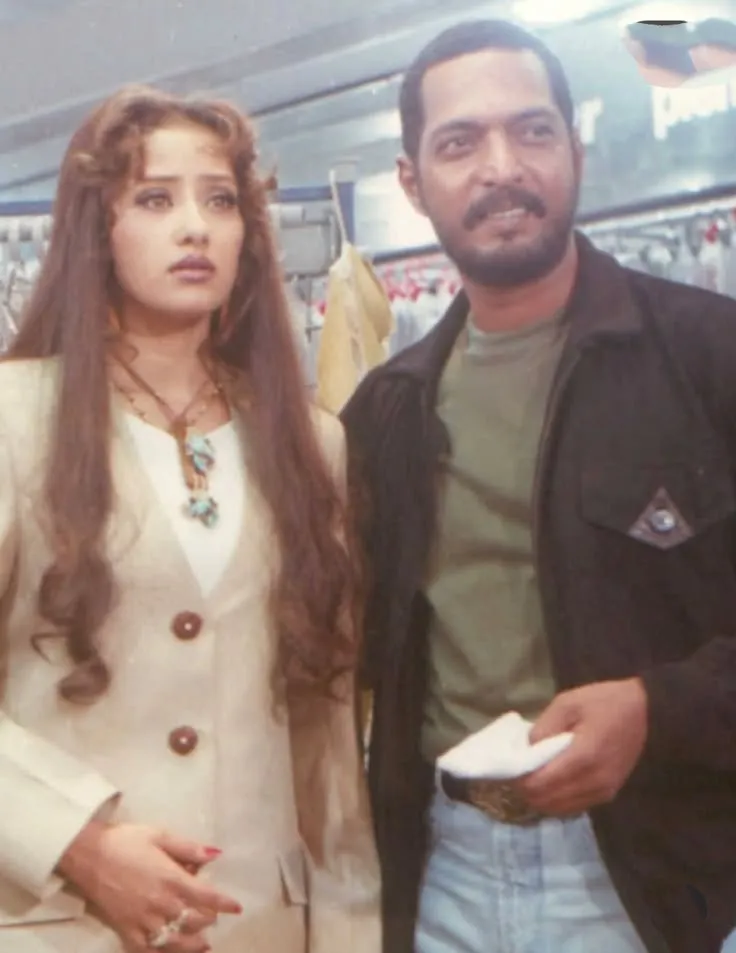
The on-screen intensity between Nana Patekar and Manisha Koirala in the 1996 film Agni Sakshi has long invited curiosity about their off-screen equation. Decades later, the film’s writer, Ranbir Pushp, has addressed the subject directly. In a recent conversation, he described the two actors as close and professionally attuned to each other on set, while making clear that he never viewed their bond as romantic, even as press speculation later took a different turn.
A Working Relationship Built on Understanding
Agni Sakshi, directed by Partho Ghosh, is a psychological thriller centred on domestic abuse and control. Nana Patekar played the obsessive and volatile husband, while Manisha Koirala portrayed the woman trapped in that relationship. Jackie Shroff also starred. The film was a commercial success and earned Patekar the National Film Award for Best Supporting Actor. Its performances, particularly the charged dynamic between Patekar and Koirala, remain among the most discussed aspects of the movie.
Ranbir Pushp, who co-wrote the film, recently reflected on the atmosphere during the shoot. He acknowledged that the two leads shared a noticeable closeness. In his words, they were near each other, there was mutual understanding, and they would discuss scenes before performing them. That preparation, he said, translated into the performances visible on screen. When asked whether the relationship was romance or friendship, he left the distinction open, saying only God knows, but emphasised the professional rapport and the quality of work that resulted from it.
Friendship and Collaboration, Not Romance Observed
Pushp was explicit about his own observation. He stated that he never thought of their equation in romantic terms. What he saw was friendship and understanding. The actors discussed their scenes together, and that was the extent of what registered with him at the time. Later, when stories appeared in the papers, he read them, but he maintained that he had never personally observed anything beyond the collaborative closeness on set.
This distinction is important. On film sets, especially those involving intense dramatic material, actors often develop strong working bonds. Shared preparation, repeated takes of emotionally demanding scenes, and the need for trust can create a sense of proximity that looks intimate to outsiders. Pushp’s account situates the Nana-Manisha dynamic firmly in that professional space. He does not deny the closeness; he reframes how it should be understood from the vantage point of someone who was present during the making of the film.
The Context of Agni Sakshi
Released in 1996, Agni Sakshi stood out among several films of the period that explored similar themes of marital control and escape. Its success rested heavily on the credibility of the central performances. Patekar’s portrayal of psychological domination and Koirala’s depiction of fear, resilience and eventual confrontation required a high degree of coordination. The writer’s recollection that the two discussed scenes in advance helps explain why their interactions felt so lived-in and unsettling on screen.
The film’s impact was significant enough that it continues to be referenced when discussions turn to powerful acting partnerships of the 1990s. National recognition for Patekar further cemented its place in the conversation about performance-driven cinema of that era. Against this backdrop, any speculation about the actors’ personal lives has always risked overshadowing the craft that made the film memorable.
How Rumours Take Shape
Media interest in the personal lives of actors is not new, and the 1990s film press was particularly active in circulating stories about off-screen relationships. In the case of Nana Patekar and Manisha Koirala, reports and speculation about a romantic involvement circulated widely after the film’s release and in subsequent years. Such narratives often draw on observed proximity, on-screen chemistry, and the absence of public clarification.
Pushp’s recent comments add a first-hand perspective that was largely missing from those earlier accounts. By stating that he never saw the relationship as romantic and that his awareness of the rumours came only later through newspapers, he draws a line between set-level collaboration and the stories that later entered public discourse. He does not claim to know the full private truth of the actors’ lives; he limits himself to what he witnessed while the film was being made.
The Value of a Measured Recollection
What makes Pushp’s intervention useful is its restraint. He confirms closeness and professional understanding without inflating it into confirmation of a romance. He acknowledges that the nature of the bond could be interpreted differently by different people, yet he anchors his own view in direct observation. In an industry where anecdotal claims can travel far and harden into accepted narrative, a participant’s refusal to overstate what he saw carries weight.
The episode also illustrates a broader pattern in how film history is remembered. Powerful on-screen partnerships frequently generate off-screen myths. Sometimes those myths contain elements of truth; sometimes they grow from the intensity of the work itself. Distinguishing between the two requires the kind of measured testimony Pushp has offered.
Performance First
Ultimately, the lasting significance of Agni Sakshi lies in the film and the performances it contains. Nana Patekar’s award-winning turn and Manisha Koirala’s committed portrayal created a screen relationship that felt authentic and disturbing. The writer’s account suggests that part of that authenticity came from the actors’ willingness to prepare together and from the understanding they developed while doing so.
Whether that understanding extended into the personal realm remains, in Pushp’s framing, a matter best left unresolved by those who were not privy to it. What he can speak to with authority is the collaborative atmosphere on set and the visible results of that collaboration. In revisiting the subject now, he has chosen clarity over sensationalism: the two were close, they worked with mutual understanding, the work showed on screen, and he himself never regarded the bond as romantic.
In an era when old film-industry stories are frequently revisited and amplified, such an approach serves both memory and accuracy. The film remains available for audiences to judge the performances on their own terms. The writer’s recollection provides context without claiming to settle every private question that the film’s intensity once raised.
Read more – pokerslive.com