
The Supreme Court of India on Sunday issued notices to the central government, the Delhi Police and the Delhi Metro Rail Corporation after hearing a batch of petitions related to large-scale detentions and public restrictions imposed in the national capital. The petitions arose from measures taken to prevent mobilisation for a protest called at Jantar Mantar. A special bench of Justices Joymalya Bagchi and V Mohana conducted an extraordinary sitting to examine allegations of non-compliance with earlier court directions and concerns over the detention of individuals.
The court directed the concerned authorities to file short affidavits explaining why contempt proceedings should not be initiated. It also sought responses on habeas corpus petitions challenging the detentions. The matter was listed for further consideration later in the week, with authorities required to submit compliance reports.
Background of the Protest Call and Security Measures
The developments followed a call by the Cockroach Janta Party for a gathering at Jantar Mantar, referred to in some reports as “Jantar Mantar 2.0.” The protest was linked to demands concerning the Chief Election Commissioner and issues related to electoral processes. Delhi Police had denied permission for the assembly, citing potential law-and-order concerns and procedural requirements for prior applications.
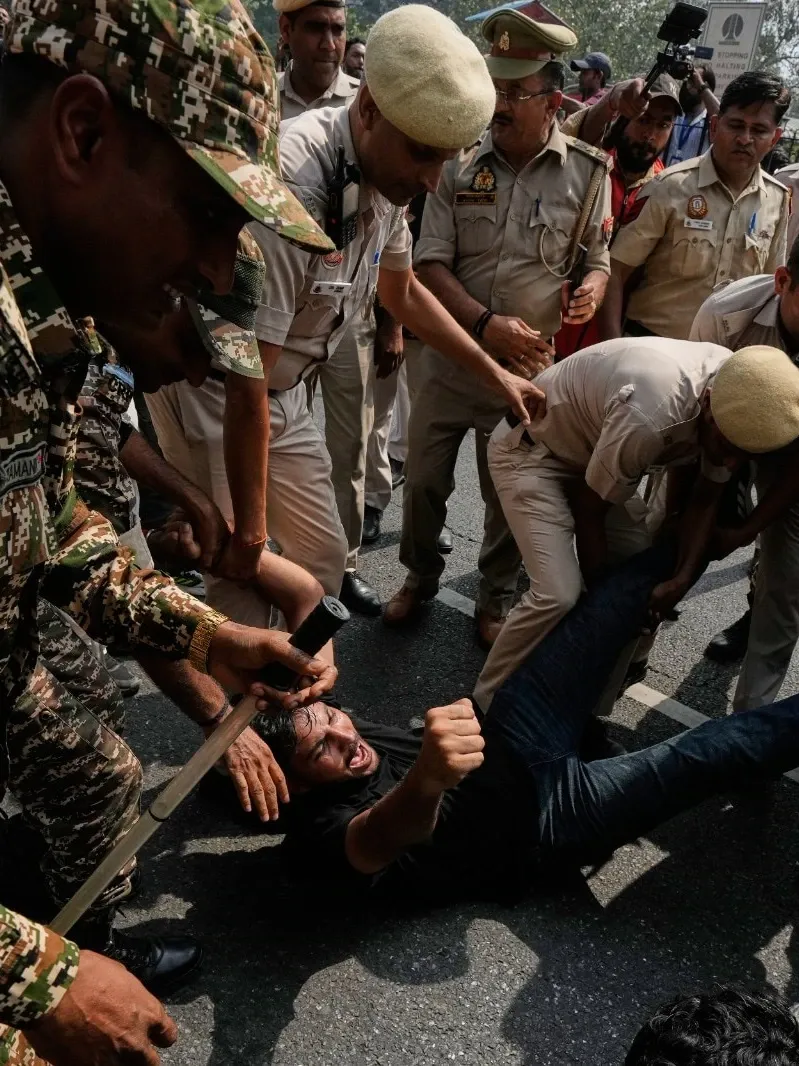
In the days leading up to the planned gathering, extensive security arrangements were put in place. Reports indicated the deployment of tens of thousands of personnel across the capital. Preventive detentions were carried out at multiple locations, with thousands of individuals taken into custody. Metro stations in and around central Delhi faced restrictions, with entry and exit gates closed at a significant number of stations. Internet services in parts of the city were affected, and train services experienced cancellations or disruptions. Traffic diversions and barricades were also implemented in key areas.
These steps came after an earlier Supreme Court order that had cautioned against complete prohibitions on the movement of metro trains and other public transport. The court had emphasised that security measures should remain proportionate and that essential services for the general public should not be brought to a complete halt.
Key Issues Raised Before the Court
Petitioners, including advocates and political representatives, approached the court alleging that the restrictions and detentions violated constitutional protections and the court’s prior directions. One contempt petition specifically named senior officials, including the Union Home Secretary, the Delhi Police Commissioner and the chairperson of the Delhi Metro Rail Corporation. The plea contended that the continued closure of metro stations and other measures amounted to wilful non-compliance.
Habeas corpus petitions focused on the detention of individuals, including political leaders and activists. Senior counsel argued that people were being detained even outside demarcated prohibitory zones and that peaceful assemblies were being prevented. Concerns were also raised about access to justice, with reports of notice boards indicating prohibitory orders near court premises, as well as restrictions affecting lawyers and journalists performing their professional duties.
During the hearing, the bench took note of submissions from both sides. The Solicitor General informed the court that many of the restricted metro stations had been reopened and that services were operating. Assurances were given regarding the restoration of normal operations and the release of a large number of detainees. The court, however, recorded that a prima facie case had been made out on the contempt allegations and proceeded to issue notices.
Directions Issued by the Bench
In its interim order, the Supreme Court issued several clear directions aimed at balancing public order with fundamental rights. It stated that there should be no detention of individuals except in accordance with the procedure established by law. Particular emphasis was placed on peaceful and unarmed assemblies outside areas covered by prohibitory orders under the relevant provisions of the Bharatiya Nagarik Suraksha Sanhita.
Metro and railway facilities were directed to function normally, unless specific regulations were required to address genuine public-order concerns under the reasonable restrictions permitted by the Constitution. Free movement of people and traffic across the city was to be permitted, subject to necessary traffic regulations. The court ordered an immediate review of barricades, with removal of those not justified by law-and-order or traffic requirements.
Internet services were to remain undisturbed in accordance with law. The bench also directed the removal of any notice boards announcing prohibitory restrictions in and around the Supreme Court and other court complexes, so that access to justice would not be hindered. Lawyers, journalists and other professionals were not to be obstructed in the discharge of their duties.
The court made clear that all these directions remained subject to the maintenance of public order. It sought detailed affidavits and compliance reports from the authorities by a specified date, while dispensing with the personal presence of the officials named in the contempt petition at the initial stage.
Broader Implications for Protest Rights and Public Order
The episode highlights the ongoing tension between the right to peaceful assembly and the state’s responsibility to maintain public order in a densely populated national capital. Jantar Mantar has long served as a designated space for demonstrations, yet repeated large-scale gatherings have prompted discussions about capacity, logistics and the impact on surrounding areas. The Supreme Court has previously observed the need to consider alternative venues with better facilities for protesters while ensuring emergency access and minimal disruption to residents.
By convening a special Sunday sitting and issuing detailed interim directions, the court underscored the importance of proportionate responses. Complete shutdowns of essential public services or widespread preventive detentions of peaceful individuals raise questions of constitutional compliance. At the same time, authorities retain the power to impose reasonable restrictions when credible threats to public order exist.
The requirement for affidavits and compliance reports places the onus on the government, police and metro authorities to justify their actions with specific facts. The court’s approach reflects an effort to prevent both the erosion of civil liberties and any genuine breakdown of order. Further hearings will examine whether the measures taken on the ground aligned with the earlier judicial guidance and the interim directions now in force.
As the matter progresses, the outcome is likely to influence how future protest-related restrictions are planned and implemented in Delhi. The balance between enabling democratic expression and safeguarding the functioning of a major metropolitan city remains a continuing challenge for both the administration and the judiciary. The Supreme Court’s intervention serves as a reminder that any curtailment of fundamental rights must rest on clear legal foundations and remain open to judicial scrutiny.
Read more – brandownerdetail.com