
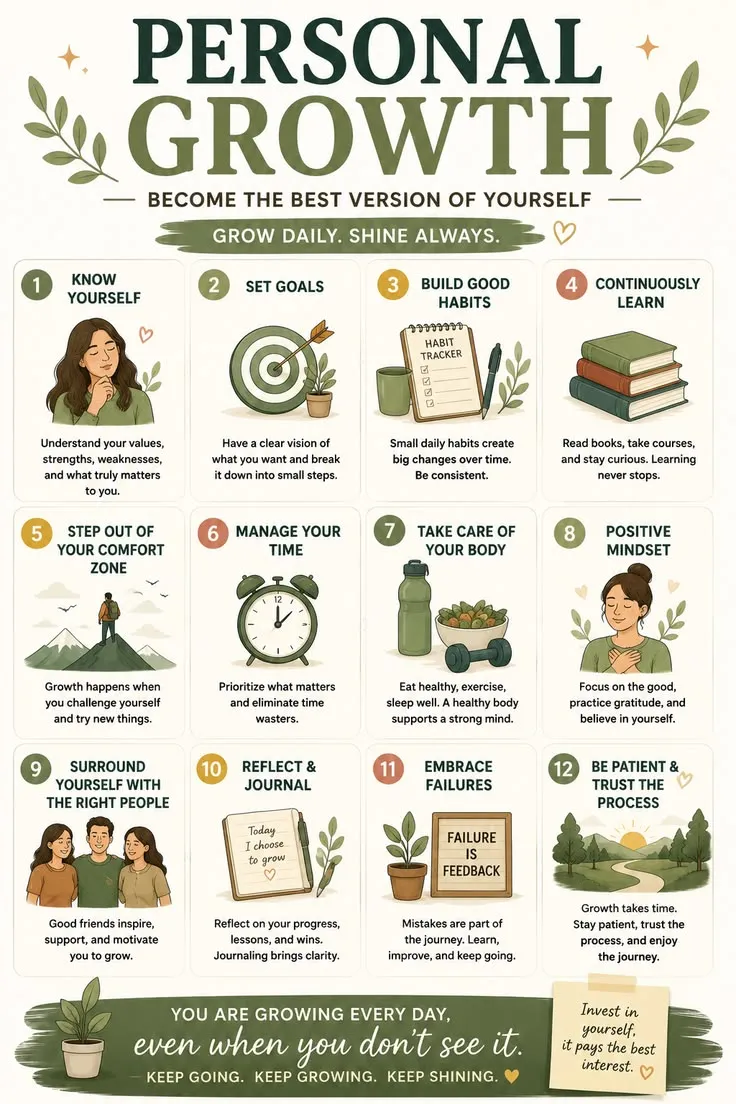
Personal development is the ongoing process of improving self-awareness, skills, habits, and overall quality of life. Setting clear goals gives this process direction and makes progress measurable. Without structure, good intentions often fade. With well-designed personal development goals, small daily actions compound into meaningful long-term change. This guide explains how to set effective goals and highlights practical areas that commonly transform everyday life.
Why Personal Development Goals Matter
Goals turn vague desires into concrete plans. Wanting more confidence, better health, or stronger relationships is a starting point, but progress requires specificity. Clear goals help prioritise time and energy, provide motivation during difficult periods, and create a sense of achievement when milestones are reached. They also encourage honest self-reflection about what is working and what needs adjustment.
Research and practical experience both show that people who set structured goals are more likely to follow through than those who rely on motivation alone. The key is designing goals that are realistic, meaningful, and supported by consistent habits.
Using the SMART Framework
One of the most reliable ways to create effective goals is the SMART method. Goals should be Specific, Measurable, Achievable, Relevant, and Time-bound. A vague aim such as “get healthier” becomes far more useful when refined into “walk for 30 minutes five days a week for the next three months.”
Specific goals remove ambiguity. Measurable goals allow progress tracking. Achievable goals remain realistic given current circumstances. Relevant goals align with personal values and longer-term aspirations. Time-bound goals create urgency and prevent endless postponement. Applying this framework consistently improves the likelihood of follow-through.
Building Better Habits as the Foundation
Goals provide direction; habits provide the system that delivers results. A goal without supporting habits often remains an intention. Linking new behaviours to existing routines, a technique sometimes called habit stacking, makes consistency easier. For example, journaling for five minutes immediately after morning coffee turns a desired behaviour into part of an established sequence.
Starting small is essential. Ambitious changes attempted all at once frequently lead to burnout. A two-minute version of a new habit is more sustainable than an overwhelming version that is abandoned after a few days. Once the small version becomes automatic, it can be expanded gradually.
Key Areas for Personal Development Goals
Health and energy form a natural foundation. Goals related to sleep, movement, nutrition, or stress management improve both physical and mental capacity. Examples include establishing a consistent bedtime, practising short daily movement, or reducing late-night screen time. These changes support every other area of life.
Emotional awareness and regulation are equally valuable. Goals such as daily journaling, practising brief mindfulness, or reflecting on emotional responses help build self-understanding. Over time, this awareness improves decision-making and relationships.
Learning and skill development keep the mind engaged. Reading a set number of pages each day, practising a language for a short daily session, or completing a structured online course are concrete ways to grow. The focus should remain on consistent input rather than rapid mastery.
Productivity and time management goals help reduce overwhelm. Planning the top three tasks each morning, limiting social media during focused work periods, or using time-blocking techniques can create noticeable improvements in both output and calm.
Relationship and communication goals strengthen connections with others. Practising active listening in important conversations, scheduling regular check-ins with family or friends, or expressing appreciation more frequently are simple yet powerful actions.
Turning Goals into Daily Practice
Writing goals down increases commitment. Reviewing them regularly—weekly or monthly—keeps them visible and allows for adjustment. Tracking progress, even in a simple notebook or digital note, provides evidence of movement and highlights patterns.
Accountability can strengthen follow-through. Sharing a goal with a trusted person, joining a group with similar aims, or scheduling regular self-reviews creates external structure. Celebrating small wins reinforces the behaviour and maintains motivation.
Flexibility remains important. Life circumstances change, and rigid goals can become sources of frustration. Adjusting timelines or methods while keeping the underlying intention is a sign of wisdom rather than failure.
Overcoming Common Obstacles
Procrastination often signals that a goal feels too large or unclear. Breaking it into smaller steps reduces resistance. Perfectionism can also interfere; progress matters more than flawless execution. Missing a day does not ruin a habit—returning the next day does.
Lack of immediate results can discourage people. Many meaningful changes compound slowly. Focusing on the system of daily actions rather than constant outcome measurement helps maintain consistency during quieter periods of visible progress.
Examples of Well-Structured Personal Goals
Effective goals are personal, yet examples illustrate the principle. Instead of “read more,” a stronger version is “read 20 pages of a non-fiction book four evenings a week for the next two months.” Instead of “be less stressed,” a clearer goal is “practise ten minutes of guided breathing on weekday mornings for 30 days.” Instead of “improve communication,” a practical version is “practise active listening in at least one important conversation each day this month.”
These examples are specific enough to guide action and measurable enough to track, while remaining realistic for most schedules.
Sustaining Long-Term Growth
Personal development is not a single project with a finish line. It is a continuing process of refinement. Periodically reviewing goals ensures they still align with current priorities. Some goals will be completed and replaced; others will evolve into permanent habits.
The most sustainable approach balances ambition with compassion. High standards provide direction, while self-kindness prevents the discouragement that stops progress. Over time, the accumulation of small, consistent improvements produces a life that feels more intentional, capable, and aligned with personal values.
Conclusion: Small Steps, Meaningful Change
Personal development goals work best when they are clear, realistic, and supported by daily habits. Using frameworks such as SMART planning, focusing on key life areas, and building systems rather than relying solely on motivation creates reliable progress. The aim is not dramatic overnight transformation but steady improvement that compounds across months and years.
Begin with one or two meaningful goals. Make them specific and time-bound. Attach them to existing routines. Track progress simply and adjust as needed. With patience and consistency, these structured efforts improve health, skills, relationships, and overall sense of direction. Better habits do not require perfection—only repeated, purposeful action.
Read more – topstablegames.com