
Personal style is much more than simply wearing fashionable clothes or following the latest trends. It is a reflection of your personality, lifestyle, values, and confidence. The way you dress communicates a great deal about who you are before you even speak, making personal style an important part of self-expression. Developing your own style does not require an expensive wardrobe or designer labels. Instead, it involves understanding what makes you feel comfortable, confident, and authentic. Fashion experts agree that a strong personal style evolves over time through thoughtful choices rather than impulsive shopping. By making intentional decisions about your clothing, colors, and accessories, you can create a wardrobe that works for every aspect of your life while helping you feel your best every day.
Why Personal Style Is Important
Having a personal style makes getting dressed easier, saves time, and reduces unnecessary spending because you become more selective about your purchases. Research in psychology has shown that clothing can influence confidence, mood, and even work performance through a concept known as “enclothed cognition,” where what you wear can affect how you think and behave. When your clothes align with your personality and daily lifestyle, you naturally feel more comfortable and self-assured. A consistent style also helps create a positive first impression in both personal and professional settings. Rather than constantly chasing changing fashion trends, developing your own style allows you to build a timeless wardrobe that remains practical, stylish, and uniquely yours.
Step 1: Understand Your Lifestyle
The first step in discovering your personal style is understanding your everyday life and choosing clothing that fits your routine. Before buying anything new, think about where you spend most of your time, whether at work, college, social gatherings, or at home. Your wardrobe should reflect your daily activities instead of being based on unrealistic expectations or occasional events. Someone with a corporate job may need formal attire, while a freelancer or remote worker may benefit from comfortable yet polished casual clothing. When your wardrobe matches your lifestyle, every piece becomes more useful and wearable. This practical approach prevents unnecessary purchases and helps you build a collection of clothes that truly supports your everyday needs.
Step 2: Find Inspiration That Reflects Your Personality
Finding inspiration is an important part of building your personal style because it helps you identify what naturally attracts you. You can explore fashion magazines, social media platforms, celebrity outfits, street fashion, or designer collections to collect ideas. Instead of copying someone’s complete look, pay attention to recurring details such as preferred colors, clothing cuts, fabrics, or accessories. Over time, you may notice that you consistently gravitate toward minimalist fashion, classic elegance, sporty outfits, or vintage-inspired looks. These patterns reveal your personal preferences and make it easier to create outfits that feel authentic. Inspiration should guide your choices while still allowing your personality to remain the central focus of your wardrobe.
Step 3: Focus on Proper Fit Rather Than Size
One of the most important aspects of great style is wearing clothes that fit your body properly. Fashion professionals consistently emphasize that well-fitted clothing often looks more expensive and polished than poorly fitting designer garments. Instead of focusing only on clothing sizes, pay attention to how garments sit on your shoulders, waist, hips, and overall body proportions. Comfortable clothing that allows natural movement also contributes to confidence throughout the day. If necessary, simple tailoring can significantly improve the appearance of jackets, trousers, dresses, and shirts without requiring a completely new wardrobe. Choosing clothes that fit well enhances your appearance while allowing your natural body shape to shine without compromising comfort.
Step 4: Build a Wardrobe with Timeless Essentials
Every stylish wardrobe begins with versatile clothing that can be mixed and matched effortlessly. Classic essentials such as well-fitted jeans, neutral T-shirts, white shirts, tailored trousers, quality jackets, and comfortable footwear never go out of style and provide the foundation for countless outfit combinations. Investing in timeless basics allows you to create different looks by simply changing accessories or layering pieces. This approach reduces wardrobe clutter while increasing outfit options for work, casual outings, travel, and special occasions. Instead of filling your closet with trend-based items that quickly become outdated, focusing on versatile essentials creates a wardrobe that remains functional, stylish, and suitable for years.
Step 5: Choose Colors That Complement You
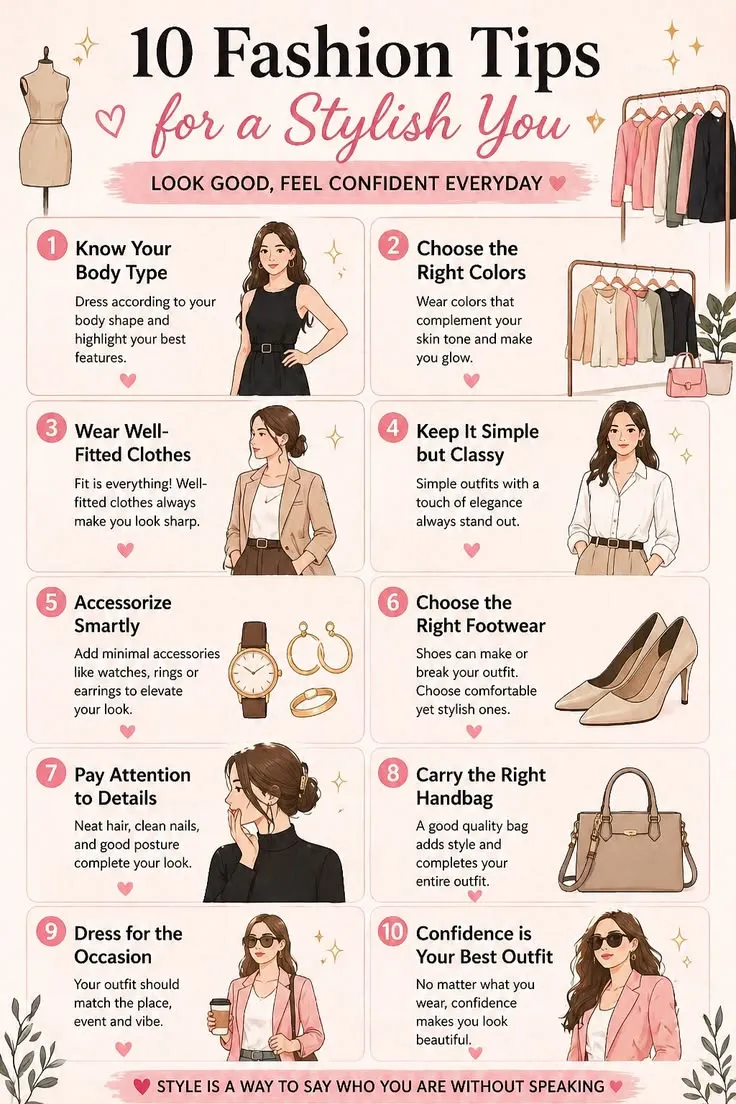
Color plays an essential role in personal style because it affects both your appearance and your confidence. While fashion trends introduce new color combinations every season, selecting shades that naturally complement your skin tone, hair color, and eye color often produces the most flattering results. Neutral colors such as black, white, navy, beige, and gray provide flexibility because they pair easily with almost anything, while carefully selected accent colors can express your personality. Building a wardrobe around a consistent color palette also makes shopping simpler since new purchases will naturally coordinate with existing clothing. Wearing colors that make you feel energetic and confident enhances both your appearance and your overall style.
Step 6: Prioritize Quality Over Fast Fashion Trends
Fashion trends change constantly, but quality clothing continues to provide value long after seasonal styles disappear. Purchasing well-made garments with durable fabrics and strong construction often proves more economical because they last longer and maintain their appearance through repeated use. Before buying new clothing, consider whether it suits your existing wardrobe, fits comfortably, and will remain useful for years rather than only a few months. Investing in fewer but higher-quality pieces encourages mindful shopping while reducing unnecessary spending and textile waste. A carefully selected wardrobe built on quality creates a more polished appearance and ensures that every item serves a meaningful purpose.
Step 7: Add Personal Touches to Make Your Style Unique
The final step in developing your personal style is adding details that express your individuality. Accessories such as watches, handbags, scarves, jewelry, belts, shoes, and sunglasses allow you to personalize even the simplest outfits without completely changing your wardrobe. Your hairstyle, grooming habits, and personal preferences also contribute significantly to your overall appearance. Rather than overwhelming your outfits with too many statement pieces, focus on balanced styling that complements your clothing and personality. These thoughtful details gradually become your signature look, making your style instantly recognizable while remaining authentic to who you are.
Common Mistakes to Avoid
Many people struggle to develop their personal style because they shop impulsively, buy clothing simply because it is discounted, or follow every new fashion trend without considering whether it suits them. Another common mistake is ignoring proper fit or purchasing items that cannot be paired with the rest of the wardrobe. Holding onto clothes that no longer fit or reflect your current lifestyle also creates unnecessary clutter. Building a successful wardrobe requires thoughtful planning, patience, and consistency rather than frequent shopping. Avoiding these common mistakes helps you create a collection of clothing that is practical, cohesive, and genuinely enjoyable to wear every day.
Conclusion
Finding your personal style is a journey of self-discovery that develops gradually through experience and thoughtful decision-making. By understanding your lifestyle, seeking inspiration, choosing clothes that fit properly, building a wardrobe of timeless essentials, selecting flattering colors, investing in quality garments, and adding personal details, you can create a style that truly represents who you are. Personal style is not about copying others or keeping up with every trend; it is about wearing clothes that make you feel comfortable, confident, and authentic. With patience and consistency, you can build a wardrobe that simplifies your daily routine, enhances your confidence, and allows your personality to shine through every outfit you wear.