
Living intentionally means making conscious choices that align with personal values and priorities rather than drifting through days guided by habit, external pressure, or distraction. In a world filled with constant demands and competing messages about success, many people find themselves busy yet unfulfilled. An intentional approach shifts the focus from reacting to designing a life that reflects what matters most. This process involves clarity, deliberate action, and regular reflection.
Clarifying Personal Values and Priorities
The foundation of intentional living is understanding what truly matters. Values act as an internal compass. They might include relationships, health, growth, contribution, creativity, or integrity. Without clarity on these core principles, decisions tend to follow the loudest external influences or short-term convenience.
Taking time to identify the three to five values that feel most essential creates a practical filter for choices. Writing them down and revisiting them periodically helps keep them active in daily awareness. When faced with options—how to spend time, energy, or money—the question becomes whether the choice supports or undermines those values. This simple alignment reduces regret and increases a sense of coherence.
Defining a Sense of Purpose
Purpose provides direction beyond immediate tasks. It answers broader questions about contribution and meaning. Purpose does not need to be grand or fixed for a lifetime; it can evolve. For some it centers on family, for others on creative work, service, learning, or building something lasting.
Articulating a working sense of purpose, even in provisional form, helps organize goals and daily actions. It supplies motivation when effort feels difficult and offers a standard for evaluating whether current activities move life in a desired direction. Revisiting and refining this sense of purpose over time keeps it relevant.
Setting Goals That Align with Values
Goals translate values and purpose into concrete direction. Intentional goals are specific enough to guide action yet flexible enough to adapt. They focus on areas that genuinely matter rather than on external measures of success that may not bring lasting satisfaction.
Breaking larger aims into smaller, manageable steps makes progress visible and sustainable. Regular review ensures that goals remain connected to deeper priorities rather than becoming empty obligations. The emphasis stays on meaningful advancement rather than mere accumulation of achievements.
Creating Space Through Simplification
Distraction and clutter—both physical and mental—pull attention away from what matters. Intentional living often involves reducing unnecessary commitments, possessions, and inputs. Saying no to activities that do not align with priorities protects time and energy for those that do.
Simplifying the environment, limiting digital interruptions, and creating boundaries around work and information consumption free mental resources. This is not about deprivation but about removing what competes with higher priorities. Greater simplicity makes focus easier and decisions clearer.
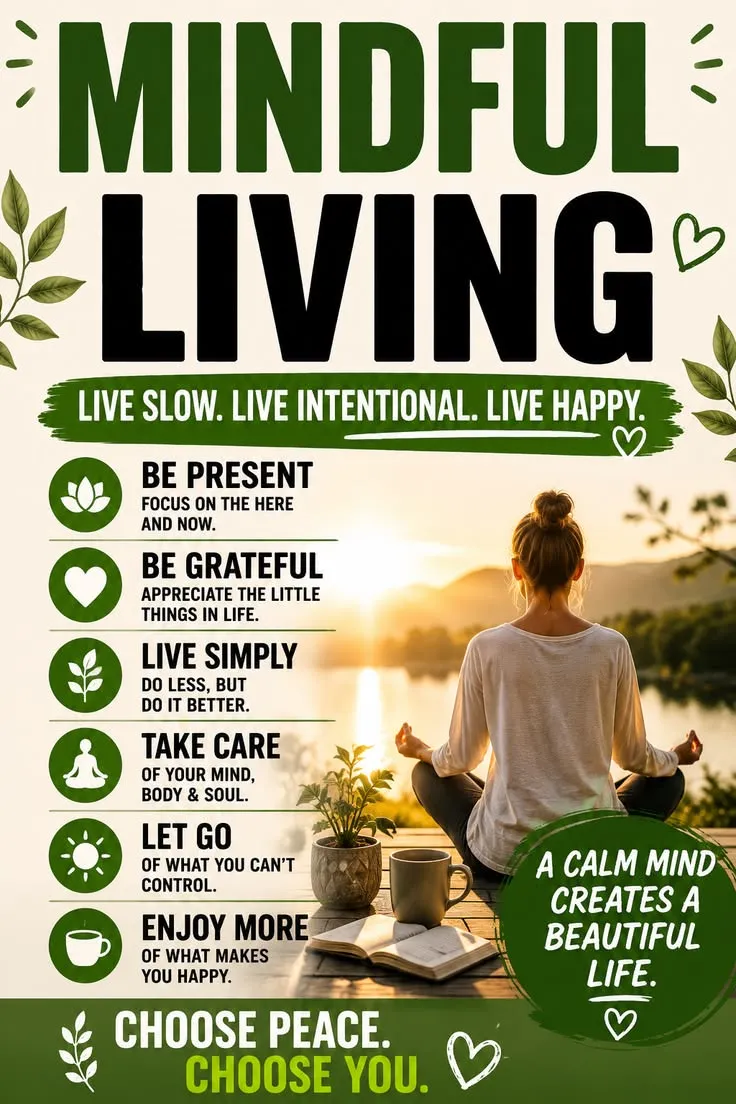
Practicing Presence and Mindful Attention
Intention requires awareness of the present moment. Much of life is spent on autopilot or lost in thoughts about the past and future. Cultivating the ability to notice what is happening right now—through brief pauses, attention to the breath, or full engagement in a single activity—strengthens the capacity to choose responses rather than react automatically.
Mindful attention also improves the quality of ordinary experiences. Conversations become richer, work more focused, and simple pleasures more available. Presence turns daily life into the actual place where intention is practiced rather than something postponed until conditions are perfect.
Building Supportive Daily and Weekly Practices
Small, repeated actions sustain intentional living more effectively than occasional bursts of motivation. Morning or evening reflection helps review alignment with values. Journaling clarifies thoughts and tracks progress. Scheduling time for priorities—relationships, health, meaningful work—treats them as non-negotiable rather than optional.
Regular review of how time and energy are spent reveals patterns that may have drifted from stated intentions. Adjustments then become practical rather than self-critical. Consistency in these practices gradually reshapes habits and default behaviors.
Focusing on What Can Be Controlled
Much frustration arises from attempting to control outcomes or other people’s actions. Intentional living emphasizes directing effort toward what lies within personal influence: choices, attitudes, effort, and responses. Accepting limits on control reduces unnecessary stress and concentrates energy where it can produce results.
This orientation also supports resilience. When circumstances change, the focus remains on thoughtful adaptation rather than resistance to reality. Agency is exercised where it exists, and acceptance is practiced where it does not.
Navigating Challenges and Imperfection
Living intentionally does not eliminate difficulty or inconsistency. There will be periods of drift, competing demands, and imperfect follow-through. The practice includes noticing these moments without harsh judgment and returning to clarity and aligned action.
Self-compassion supports sustainability. Treating setbacks as information rather than failure makes it easier to resume intentional choices. Progress is measured by increasing alignment over time rather than by unbroken perfection.
The Cumulative Effect of Conscious Choices
Each deliberate decision—how to spend an hour, what to give attention to, which commitments to accept—shapes the direction of a life. Over weeks and years these choices accumulate into a pattern that reflects personal values more closely. The result is often a greater sense of meaning, reduced internal conflict, and clearer priorities.
Intentional living is less about achieving a fixed ideal and more about continually orienting toward what matters. It requires honesty, periodic reflection, and the willingness to adjust course. By clarifying values, defining purpose, aligning goals, simplifying distractions, practicing presence, and focusing effort wisely, it becomes possible to move through daily life with greater direction and integrity. The process itself becomes a source of steadiness and fulfillment, turning ordinary days into expressions of a thoughtfully chosen life.
Read more – GadgetsMonk.com