
Cloud technology has become one of the most important developments in modern computing, changing the way individuals, businesses, and organizations store information, use applications, and access digital services. From watching movies online and storing photos on smartphones to running large business operations, cloud computing supports many activities that people use every day.
In simple terms, cloud technology allows users to access computing resources such as storage, software, servers, and databases through the internet instead of relying only on physical hardware. This means people can use powerful digital services without needing to own or manage expensive computer systems.
Today, cloud computing is used in education, healthcare, banking, entertainment, communication, business, artificial intelligence, and many other industries. It provides flexibility, faster access to technology, and the ability to manage large amounts of data efficiently.
This guide explains what cloud technology is, how it works, and how cloud computing powers everyday life.
What Is Cloud Technology?
Cloud technology refers to the use of internet-based systems that provide computing services whenever users need them. These services are delivered through remote data centers managed by cloud service providers.
Instead of saving files only on a personal computer or local storage device, users can store and access information through online platforms. Similarly, businesses can use cloud-based software and infrastructure without building their own large computer systems.
Cloud technology includes different services such as data storage, software applications, computing power, networking, and databases.
The main idea behind cloud computing is providing easy access to technology resources through the internet while reducing the need for physical infrastructure.
How Cloud Computing Works
Cloud computing works through a combination of internet connections, data centers, servers, and software systems.
When a user uploads a file, uses an online application, or accesses a cloud-based service, the request is processed through internet-connected servers located in data centers.
These data centers contain powerful computers that store information and run applications. Cloud providers manage the hardware, security systems, maintenance, and updates required to keep services running.
Users can access cloud services through devices such as smartphones, laptops, tablets, and desktop computers.
This system allows people to use advanced technology without directly managing the complex infrastructure behind it.
Cloud Storage for Personal Use
One of the most common uses of cloud technology is online storage.
Cloud storage allows users to save documents, photos, videos, and other files securely on internet-based platforms. Instead of depending only on device storage, users can access their information from multiple devices.
For example, people can store important documents online and open them from a smartphone, tablet, or computer whenever needed.
Cloud storage also helps protect data because files can remain available even if a personal device is damaged, lost, or replaced.
This convenience has made cloud storage an essential part of everyday digital life.
Cloud Technology in Communication
Many modern communication services rely on cloud computing.
Email platforms, messaging applications, video conferencing tools, and collaboration systems use cloud infrastructure to deliver fast and reliable communication.
Cloud technology allows users to communicate from different locations without needing direct connections between devices.
Businesses especially benefit from cloud-based communication tools because employees can collaborate remotely, share information, and work together from different places.
The growth of remote work has increased the importance of cloud-powered communication solutions.
Cloud Computing in Entertainment
Entertainment services have been transformed by cloud technology.
Streaming platforms use cloud infrastructure to deliver movies, music, games, and other digital content to millions of users worldwide.
Instead of downloading large files, users can access content instantly through internet-connected devices.
Cloud computing helps entertainment companies manage large amounts of data, provide personalized recommendations, and deliver smooth experiences.
Online gaming also uses cloud technology to provide powerful gaming experiences without requiring users to own expensive hardware.
Cloud Technology in Education
Cloud computing has changed the way students learn and teachers deliver education.
Online learning platforms, digital classrooms, cloud-based documents, and virtual collaboration tools allow students to access educational resources from anywhere.
Students can store assignments online, participate in virtual classes, and collaborate with classmates through cloud applications.
Educational institutions also use cloud systems to manage student information, research data, and administrative operations.
Cloud technology has made education more flexible and accessible.
Cloud Computing in Healthcare
Healthcare organizations use cloud technology to improve patient care, manage information, and support medical research.
Cloud systems allow healthcare providers to store and access medical records securely while improving communication between departments.
Doctors can use cloud-based platforms to share information, analyze medical data, and support remote healthcare services.
Cloud computing also helps researchers process large amounts of health-related data and develop better solutions.
Security and privacy remain important considerations because healthcare information is highly sensitive.
Cloud Technology in Banking and Finance
The financial industry relies heavily on cloud computing for secure and efficient operations.
Banks and financial organizations use cloud systems for data management, customer services, online banking platforms, and fraud detection.
Cloud technology allows financial institutions to process large volumes of transactions quickly while improving customer experiences.
Advanced technologies such as artificial intelligence and data analytics also depend on cloud infrastructure to analyze financial information and identify patterns.
Strong security measures are essential to protect financial data stored and processed through cloud systems.
Cloud Computing for Businesses
Businesses of all sizes use cloud technology to improve efficiency and reduce technology costs.
Cloud services allow companies to access software, storage, databases, and computing resources without investing heavily in physical infrastructure.
Small businesses benefit because they can use advanced tools without purchasing expensive systems.
Large organizations use cloud computing to manage global operations, analyze data, support remote employees, and develop digital products.
Cloud technology also allows businesses to quickly increase or reduce resources according to their needs.
Cloud Technology and Artificial Intelligence
Artificial intelligence development depends significantly on cloud computing.
AI systems require powerful computing resources to process large amounts of data and perform complex calculations.
Cloud platforms provide businesses and developers with access to advanced computing capabilities without requiring their own expensive infrastructure.
Many AI-powered applications, including virtual assistants, recommendation systems, and automation tools, use cloud technology to function effectively.
The combination of cloud computing and artificial intelligence is driving innovation across multiple industries.
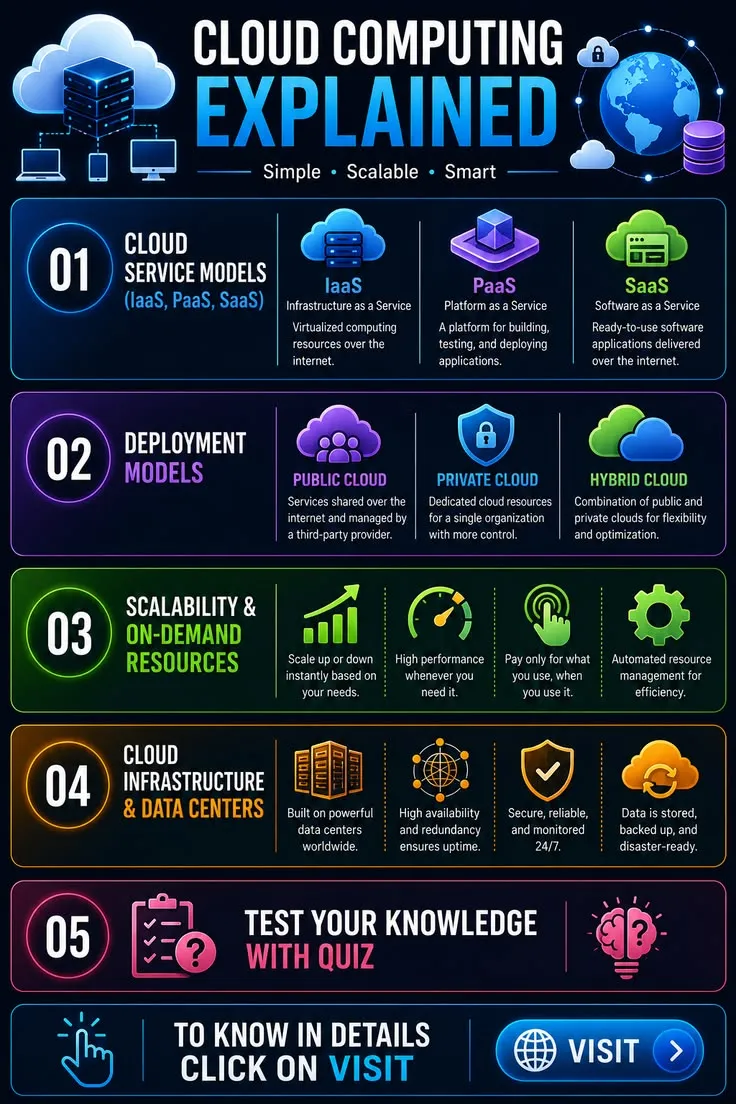
Types of Cloud Services
Cloud computing services are generally divided into different categories based on how they are used.
Infrastructure as a Service provides basic computing resources such as servers, storage, and networking.
Platform as a Service provides tools and environments for developers to create and manage applications.
Software as a Service allows users to access software applications through the internet without installing them locally.
These service models help individuals and organizations choose cloud solutions according to their specific needs.
Benefits of Cloud Technology
Cloud computing provides several advantages for users and organizations.
It offers flexibility because users can access services from different locations and devices.
Cloud systems improve efficiency by reducing the need for physical infrastructure and manual maintenance.
They support collaboration by allowing multiple users to work on shared files and applications.
Cloud technology also helps organizations scale operations quickly and respond to changing demands.
Security and Privacy Challenges of Cloud Computing
Although cloud technology offers many benefits, security remains an important concern.
Because data is stored online, organizations must protect information from unauthorized access, cyber threats, and data breaches.
Strong passwords, encryption, security monitoring, and regular software updates help improve cloud security.
Cloud service providers invest heavily in security systems, but users must also follow responsible digital practices.
Understanding privacy settings and managing access permissions are important steps for protecting information.
Future of Cloud Technology
Cloud computing continues to evolve with advancements in artificial intelligence, automation, edge computing, and faster internet networks.
Future cloud systems are expected to become more intelligent, secure, and efficient.
Businesses will continue using cloud technology to improve innovation, while individuals will benefit from smarter digital services.
As more devices become connected, cloud computing will remain a key technology supporting the digital world.
Conclusion
Cloud technology has become an essential part of everyday life, powering services that people use for communication, entertainment, education, healthcare, finance, and business.
By providing access to storage, software, computing power, and digital services through the internet, cloud computing makes technology more convenient, flexible, and accessible.
From storing personal photos to supporting global businesses, cloud technology continues to transform how people interact with the digital world.
As technology advances, cloud computing will play an even greater role in creating smarter, faster, and more connected experiences for individuals and organizations worldwide.