
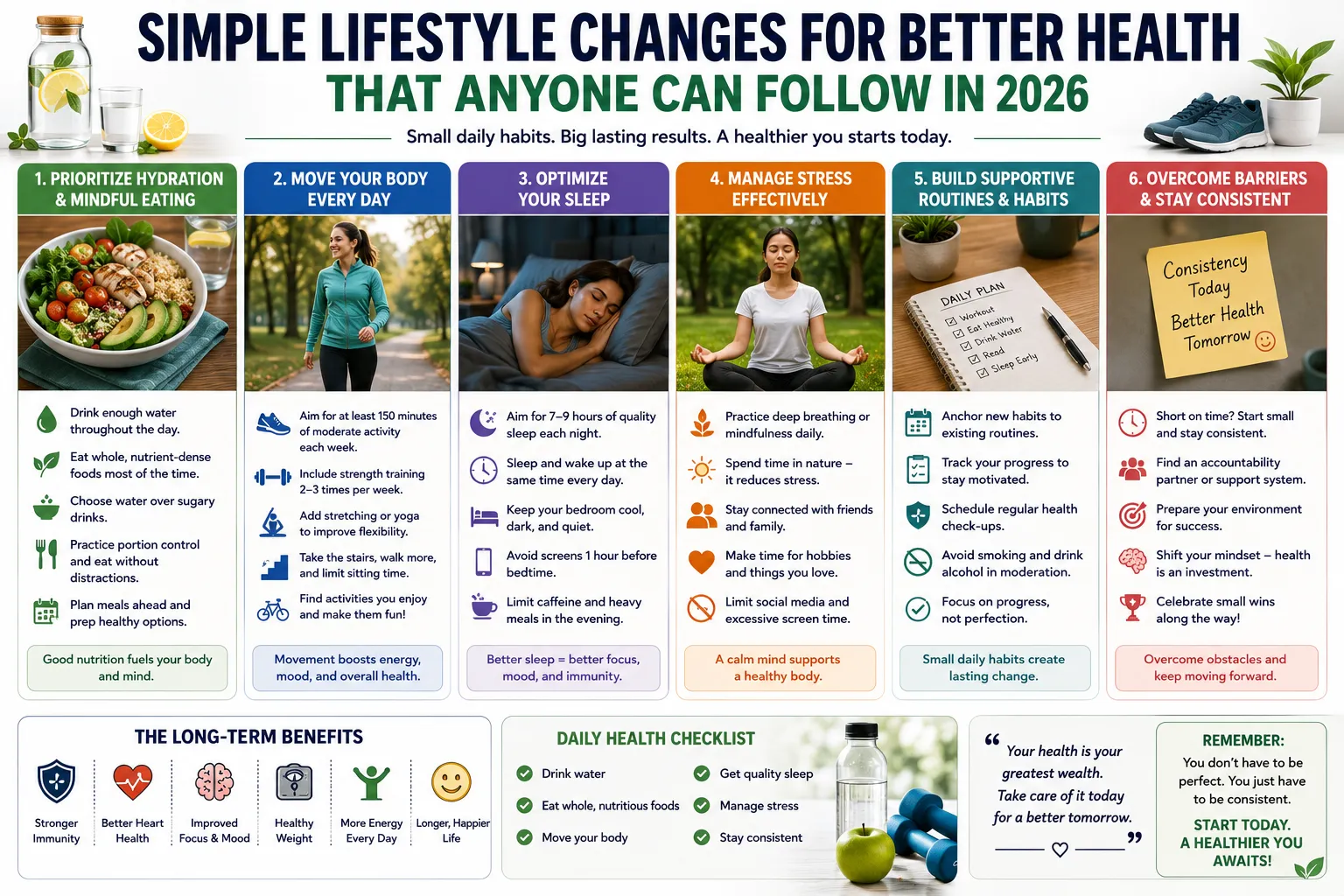
In today’s fast-paced world, achieving optimal health often feels overwhelming. However, meaningful improvements frequently stem from small, consistent daily habits rather than drastic overhauls. Simple lifestyle changes—supported by health research—can enhance physical vitality, mental clarity, and overall well-being without requiring expensive equipment or extreme discipline.
This guide highlights practical, evidence-based adjustments in nutrition, movement, sleep, stress management, and daily routines. These accessible steps suit beginners and busy individuals alike, fostering sustainable progress toward a healthier life.
Prioritize Hydration and Mindful Eating
Staying adequately hydrated ranks among the easiest yet most impactful changes. The human body consists largely of water, and proper intake supports digestion, cognitive function, energy levels, and temperature regulation. Aim for consistent water consumption throughout the day, potentially flavored with natural additions like lemon or herbs for variety.
Pair hydration with mindful eating focused on whole foods. Emphasize fruits, vegetables, whole grains, lean proteins, and healthy fats while reducing processed items and added sugars. Simple swaps—such as choosing water over sugary drinks or adding vegetables to meals—yield noticeable benefits in energy and weight management. Planning meals ahead or batch-cooking on weekends simplifies adherence, making nutritious choices default options.
Portion awareness and eating without distractions further promote better digestion and satisfaction, reducing overeating tendencies.
Incorporate Regular Movement into Daily Life
Physical activity does not demand gym memberships or intense workouts. Consistent movement, such as brisk walking, contributes significantly to cardiovascular health, mood enhancement, and metabolic function. Aim for at least 150 minutes of moderate activity weekly, achievable through short daily walks, stair use, or household chores.
Strength training, even with body weight exercises like squats or push-ups, builds muscle and bone density. Flexibility practices such as stretching or yoga improve mobility and reduce injury risk. The key lies in finding enjoyable activities that fit naturally into routines—dancing, gardening, or cycling—to ensure long-term consistency.
Start small: ten-minute movement breaks during work or evening strolls accumulate benefits over time.
Optimize Sleep Habits for Restoration
Quality sleep serves as a cornerstone of health, influencing immunity, mood, and cognitive performance. Most adults benefit from seven to nine hours nightly. Establish a consistent schedule by going to bed and waking at similar times daily, even on weekends.
Create a restful environment: keep bedrooms cool, dark, and quiet. Wind-down routines—such as reading, light stretching, or avoiding screens an hour before bed—signal the body to prepare for rest. Limiting caffeine and heavy meals in the evening further supports deeper sleep cycles.
Addressing sleep improves daytime energy and decision-making around other healthy habits.
Manage Stress Through Simple Practices
Chronic stress undermines health, contributing to various conditions. Daily techniques like deep breathing, mindfulness, or short nature walks effectively lower cortisol levels. Even five minutes of focused breathing or gratitude reflection can shift perspective and reduce tension.
Building social connections—through regular calls, shared meals, or community involvement—provides emotional support and combats isolation. Hobbies or creative outlets offer additional outlets for relaxation and joy.
Limit excessive screen time, particularly social media, to preserve mental space and improve sleep quality.
Build Supportive Routines and Preventive Habits
Sustainable change thrives on routines. Anchor new habits to existing ones: drink water after waking or stretch during coffee breaks. Track progress with simple journals or apps to maintain motivation without obsession.
Preventive measures, such as regular check-ups and staying current with vaccinations, catch issues early. Quitting or reducing smoking and limiting alcohol intake deliver rapid health returns. Moderation in alcohol, combined with balanced choices, supports liver function and better sleep.
Focus on progress over perfection. Small setbacks are normal; resuming habits quickly prevents discouragement.
Overcoming Common Barriers
Busy schedules often hinder change. Solutions include meal prepping, short exercise sessions, or accountability partners. Environmental cues—placing water bottles visibly or workout clothes ready—prompt positive actions.
Mindset shifts matter: view changes as investments in future well-being rather than restrictions. Celebrate non-scale victories like improved energy or mood to sustain enthusiasm.
Long-Term Benefits and Sustainability
Consistent application of these changes compounds over time, reducing risks for chronic conditions and enhancing quality of life. Improved habits support better immunity, mental resilience, and physical function across ages.
Tailor approaches to personal preferences and circumstances for longevity. What works varies individually, so experimentation and adjustment remain key.
Conclusion
Simple lifestyle changes—hydration, nutritious eating, daily movement, quality sleep, stress management, and supportive routines—offer powerful pathways to better health accessible to everyone. These adjustments require minimal resources yet deliver substantial returns in energy, mood, and longevity.
Begin with one or two areas, building gradually for sustainable results. In 2026 and beyond, prioritizing these fundamentals empowers proactive well-being without complexity. Small daily choices accumulate into transformative health outcomes, proving that meaningful change starts with consistent, intentional steps anyone can embrace.