
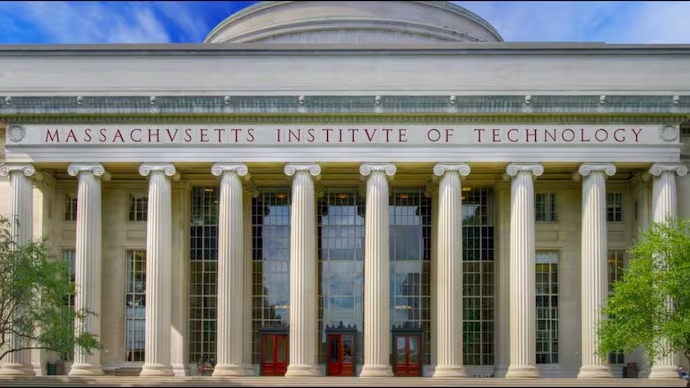
Artificial intelligence has reached a point where college homework is no longer a reliable way to prove what a student actually knows. Advanced AI systems can now handle essays, coding tasks, mathematical problems, research-style assignments and several other forms of academic work that once required hours of independent effort. A new discussion at the Massachusetts Institute of Technology is therefore raising a much bigger question: if AI can complete the assignment, what exactly should colleges be testing?
The issue is not simply about students using AI to cheat. It goes deeper than that. The arrival of powerful generative AI is forcing universities to reconsider what learning means, how students should demonstrate their abilities and whether some traditional assessments are still useful in their current form.
AI Is Changing Homework Fast
For years, homework served a fairly simple purpose in higher education. A professor could give students an essay, programming task, problem set or research assignment and later judge the submitted work. The assumption was that the final product represented the student’s own understanding and effort.
That assumption has become much harder to maintain.
MIT’s latest work on AI and education says many assignments used in its classes can already be completed by AI systems. The concern is not that every answer produced by an AI tool will be perfect, but that the technology has become capable enough to produce credible academic work across a wide range of subjects.
That changes the value of the finished assignment.
A polished essay may show that someone knows how to use an AI system effectively. A working program may demonstrate the ability to guide an AI coding assistant. A detailed research response could reflect good prompting rather than deep understanding of the subject.
For colleges, that creates an uncomfortable gap between producing an answer and actually learning how to reach that answer.
MIT Calls This A Turning Point
MIT has described the current moment as a major turning point for higher education. Its Ad Hoc Committee on AI Use in Teaching, Learning, and Research Training spent months examining how students and instructors are using generative AI and what those changes mean for education.
The committee’s recommendations do not simply call for banning AI from classrooms. Instead, they argue for a broader rethink of teaching, assessment and academic policies. MIT says universities need to reconsider what students should learn, how that learning should be measured and where AI should be allowed or restricted.
That distinction is important.
Trying to completely remove AI from student life may not be realistic anymore. Students are already surrounded by AI tools, and many future workplaces will expect graduates to use them. The more practical question is whether students can use AI without losing the ability to think, question, calculate, write and solve problems themselves.
MIT’s approach is therefore more complicated than simply saying “AI is bad.”
Why Homework May Not Be Enough
Traditional take-home assignments were designed for a world where completing the work required substantial individual effort. Students had to search for information, organize their thoughts, write drafts, solve problems and correct mistakes.
AI can now perform several of those steps in seconds.
This does not mean homework has suddenly become useless. It means professors may need to change what homework is supposed to accomplish.
An assignment that asks students to produce a standard five-page essay could become less meaningful if an AI system can generate a convincing version almost instantly. A programming assignment can face a similar problem when AI tools can produce large sections of functional code.
The learning process itself may need greater attention.
MIT researchers have highlighted the importance of the intellectual struggle involved in learning. Students often learn through mistakes, failed attempts, revisions and moments when they have to work through confusion. If an AI tool immediately removes that struggle, students may finish assignments faster while developing fewer of the underlying skills.
That creates a strange situation where grades can improve while learning potentially becomes weaker.
Colleges May Rethink Exams
This is where exams become especially important.
An in-person examination gives teachers an opportunity to see what students can do without relying completely on an external AI system. It can test memory, reasoning, calculations, writing and problem-solving under controlled conditions.
But MIT’s message is not simply that every college should return to old-fashioned handwritten exams.
Instead, assessment itself may need to become more flexible.
Some courses could use supervised written exams. Others might benefit from oral examinations where students explain their reasoning directly to a professor. Practical subjects could use demonstrations, projects or laboratory work. Group discussions, presentations and real-time problem-solving could also become more important.
The basic idea is simple: colleges need assessments that reveal the student’s thinking, not just the quality of the final output.
Oral Tests Could Become Important
One interesting possibility is the greater use of oral assessments.
If a student submits a complicated project, an instructor could ask them to explain why they made particular decisions, defend their conclusions or solve a related problem without preparation.
That creates a different kind of academic test.
A student who genuinely understands the material should generally be able to explain the reasoning behind their work. Someone who simply submitted AI-generated material may struggle when asked to go beyond the finished answer.
Oral assessments are not suitable for every subject, and they can require considerably more time from teachers. Still, they offer something traditional homework cannot always provide: direct evidence of how a student thinks.
Practical demonstrations can serve a similar purpose in engineering, medicine, computer science, design and laboratory-based courses.
AI Should Not Simply Be Banned
There is another side to the debate that universities cannot ignore.
AI is becoming part of professional life. Graduates entering technology, business, finance, media, research, engineering and many other industries will likely encounter AI-powered tools regularly.
Teaching students to completely avoid AI could therefore create a different problem.
Students need to understand when AI is useful, when it is unreliable and when human judgment must take control. They also need to understand issues around accuracy, privacy, intellectual property, bias and responsible use.
MIT’s recommendations recognize this need by supporting clear, course-specific rules about AI. The institute has recommended that instructors explain what AI use is permitted, what is prohibited and why those rules exist.
That could be much more useful than vague instructions telling students not to use AI.
Every Subject May Need Different Rules
A single AI policy for an entire university may not work very well.
Imagine a creative writing course where students are studying how AI affects storytelling. Completely banning AI could prevent useful experimentation.
Now consider a mathematics course where the goal is to determine whether students can independently solve fundamental equations. Allowing an AI system to provide every calculation could undermine the purpose of the assessment.
Computer science creates another complicated example. Students may need to learn how to work alongside AI coding tools because those tools are becoming part of real software development. At the same time, they still need to understand algorithms, debugging and programming fundamentals.
This means universities may move toward more subject-specific AI policies rather than one universal rule.
Human Skills Become More Valuable
The rise of AI could actually make certain human abilities more important.
Critical thinking is one example.
If AI can quickly generate five possible answers, students still need to decide which answer makes sense. They need to identify incorrect assumptions, check facts, recognize weak reasoning and understand the consequences of a decision.
Communication also remains important.
A machine can produce a polished paragraph, but professionals still need to explain ideas to colleagues, defend decisions and respond to unexpected questions.
The same applies to creativity, judgment, teamwork and practical problem-solving.
The challenge for universities is therefore not simply protecting students from AI. It is making sure students develop capabilities that AI cannot simply substitute for during their education.
What Students Should Expect Next
Students should probably expect more variation in how colleges assess them.
Assignments are unlikely to disappear, but their design could change. Professors may ask students to document their research process, discuss how they reached a conclusion or explain how AI was used during a project.
More classroom-based work could also appear in some courses.
Instead of submitting everything at home, students might complete parts of an assignment under supervision and then use AI during another stage. This could help teachers distinguish between skills students are expected to master independently and skills where AI assistance is considered appropriate.
Clearer AI rules are also likely to become increasingly common.
For students, the biggest lesson is fairly straightforward: knowing how to generate an answer will not necessarily be enough.
The Bigger Question For Education
The AI debate is ultimately forcing colleges to answer a question that existed long before ChatGPT became popular.
What is the real purpose of education?
If the goal is simply to produce correct answers, increasingly capable machines will make that goal less meaningful. If the goal is to develop people who can understand complicated ideas, challenge assumptions, make responsible decisions and solve unfamiliar problems, universities have a stronger reason to redesign how they teach.
MIT’s latest recommendations point toward that broader transformation. The institute is encouraging more AI-aware education, stronger hands-on learning and continuous adaptation as technology changes.
Conclusion
AI is not just changing how students complete homework; it is challenging the way colleges measure learning itself. When a machine can produce convincing essays, solve problems and generate working code, the final submission may no longer tell the full story about a student’s ability. Universities therefore have a difficult balancing act ahead. They need to protect genuine learning while preparing students for workplaces where AI will be normal. The future may bring more practical work, oral assessments, supervised exams and clearer AI rules alongside traditional coursework. For students, the safest strategy is not simply learning how to use AI, but learning how to think independently while using it responsibly.
Read More :- globe-wander.com