
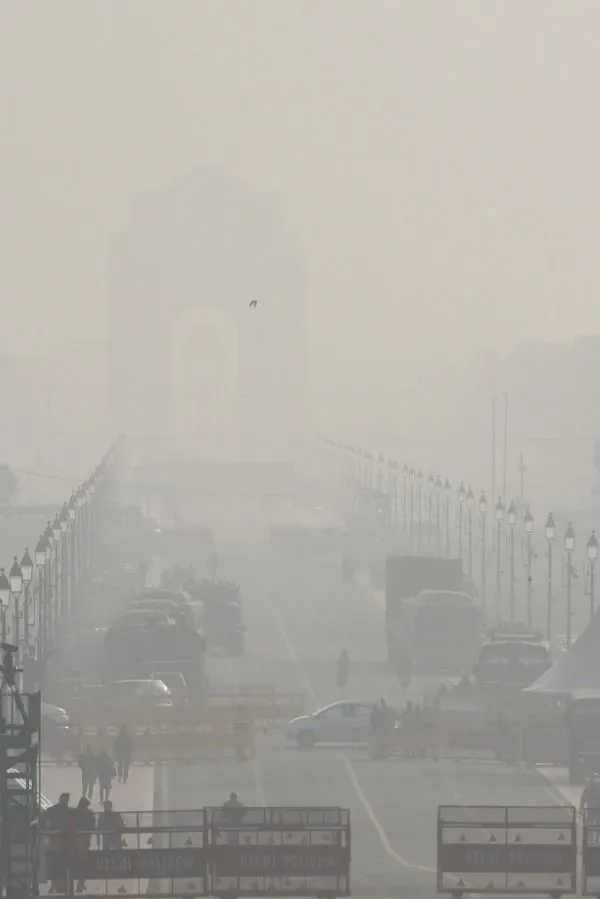
Delhi’s air quality has swung sharply within a short span, with the Air Quality Index climbing into the unhealthy range after a brief period of cleaner air. Readings that had dipped following rainfall later rose again, reflecting the fragile nature of temporary improvements at this time of year. The trend is particularly concerning as the capital moves into the winter months, when weather conditions typically make it harder for pollutants to disperse.
According to monitoring platforms, the AQI had improved to levels around the satisfactory range after recent showers. Within hours, however, it began climbing once more, with some readings entering the poor or unhealthy category. Such rapid shifts illustrate how dependent the city’s air remains on short-lived meteorological relief rather than sustained reductions in emissions.
Why Temporary Gains Fade Quickly
Rainfall and stronger winds can wash pollutants out of the air or push them away from the city. Once those conditions ease, local and regional sources resume their contribution and concentrations rise again. Official weather forecasts have indicated dry conditions persisting for several days, with no significant rain expected in the immediate term. Partly cloudy skies and moderate temperatures offer limited help in clearing the air.
As temperatures begin to drop and wind speeds ease with the approach of winter, the atmospheric mixing height—the layer of air in which pollutants can disperse—tends to shrink. This creates a more confined volume in which emissions accumulate closer to the ground. The result is the familiar pattern of rising particulate levels that characterises the post-monsoon and early winter period in the National Capital Region.
Multiple Sources Drive the Build-Up
Delhi’s pollution is the product of both local and regional factors. Vehicle emissions remain a major contributor within the city, particularly from the large fleet of cars, two-wheelers, buses and trucks. Construction and road dust, industrial activity, waste burning and biomass use for cooking or heating add further load. Secondary particulate matter, formed when gases such as sulphur dioxide, nitrogen oxides and ammonia react in the atmosphere, accounts for a substantial share of the fine particles measured in the air.
Beyond the city limits, emissions from neighbouring areas travel into Delhi under certain wind patterns. Crop-residue burning in surrounding agricultural states, though reduced in some recent seasons, still contributes episodically during the harvest period. Even when farm fires decline, local sources continue to generate pollution that becomes trapped under stagnant winter conditions.
Studies of winter air quality in the region consistently show that meteorological factors amplify the impact of these emissions. Temperature inversions, in which cooler air near the surface is capped by warmer air above, prevent vertical mixing. Low wind speeds limit horizontal dispersion. The combination turns the airshed into a temporary reservoir for pollutants.
The Seasonal Trajectory Ahead
The period from mid-October onward traditionally marks the beginning of the more difficult air-quality season. Early winter sees the first influence of agricultural residue burning alongside declining atmospheric dispersion capacity. Later months bring even more stable and fog-prone conditions that allow secondary particles to form and persist.
Health advisories typically intensify as the AQI moves into the poor and very-poor categories. Sensitive groups—children, the elderly and people with respiratory or cardiac conditions—are advised to limit outdoor exposure. Broader public-health impacts include increased hospital visits for breathing difficulties and long-term risks associated with repeated exposure to fine particulate matter.
What Sustained Improvement Requires
Short-term weather events can provide intermittent relief, but lasting change depends on reducing emissions at source. Measures targeting vehicular pollution, stricter control of construction dust, better waste management and coordinated regional action on biomass burning remain central. The Graded Response Action Plan provides a framework for escalating restrictions as air quality worsens, yet its effectiveness relies on consistent implementation across the entire airshed.
Monitoring data from multiple stations across Delhi often reveal wide variation, with some locations recording significantly higher readings than the city-wide average. This spatial unevenness underscores the need for both city-level and neighbourhood-level interventions.
A Familiar Pattern with Rising Stakes
The recent jump in AQI after a brief cleaner spell is consistent with the seasonal pattern observed in previous years. What makes the current period noteworthy is the speed of the deterioration once meteorological support withdrew. With dry weather forecast and winter conditions approaching, the window for natural dispersion is narrowing.
Residents and authorities alike are watching the numbers closely. While a single day’s reading does not determine the entire season, the trajectory so far suggests that pollution levels are likely to face upward pressure in the weeks ahead unless emissions are meaningfully curtailed. The combination of local sources, regional contributions and unfavourable weather continues to shape Delhi’s air quality challenge as the colder months set in.
Read more – Lpainhand.com